Address
304 North Cardinal
St. Dorchester Center, MA 02124
Work Hours
Monday to Friday: 7AM - 7PM
Weekend: 10AM - 5PM
Address
304 North Cardinal
St. Dorchester Center, MA 02124
Work Hours
Monday to Friday: 7AM - 7PM
Weekend: 10AM - 5PM
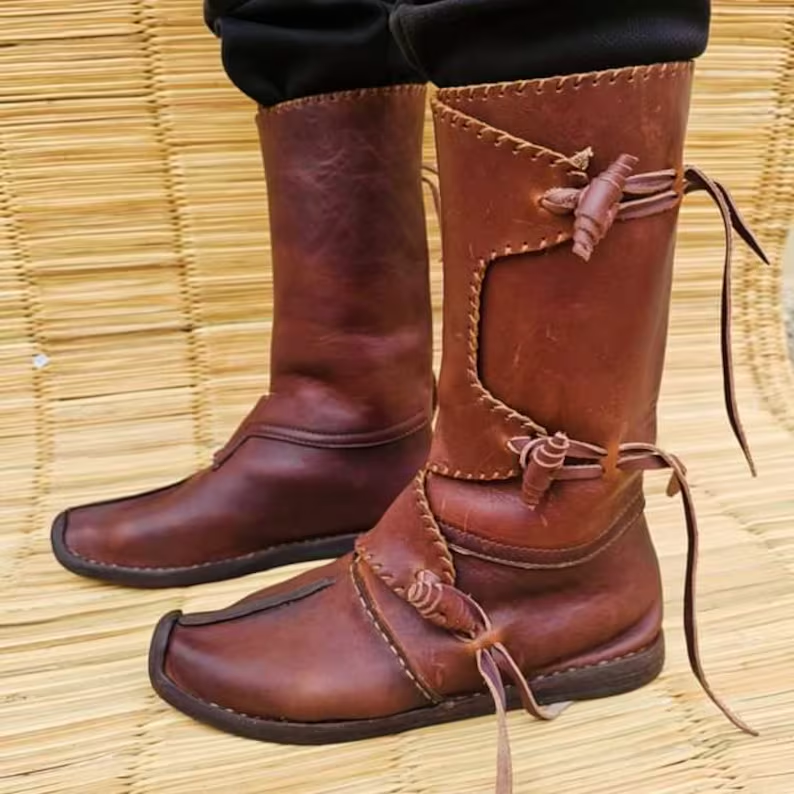
Historical footwear tells an important story about how people lived, traveled, and worked in the past. Two of the most fascinating examples come from the Viking Age and the medieval period.
Although Viking shoes and medieval shoes may look similar at first glance, there are several important differences in design, materials, construction techniques, and cultural influence.
This guide explains how Viking footwear evolved and how it compares with medieval shoes used later in European history.
Viking footwear was designed primarily for practicality. Vikings traveled long distances, worked outdoors, and needed shoes that were durable and flexible.
According to research from the
<a href=”https://www.nationalmuseet.dk/en” target=”_blank” rel=”noopener”>National Museum of Denmark</a>,
most Viking shoes were made from natural leather using simple construction techniques.
These shoes allowed Vikings to move quickly across forests, rocky terrain, and farmland.
During the medieval period, footwear gradually became more decorative. Social status began to influence clothing and shoe design.
Artifacts preserved in the
<a href=”https://www.britishmuseum.org/collection” target=”_blank” rel=”noopener”>British Museum</a>
show how medieval footwear evolved into more elaborate styles.
These changes reflected the growing importance of fashion and social hierarchy in medieval Europe.
Both Viking and medieval shoes often used the turn shoe method.
This technique created flexible and durable footwear that could withstand daily use.
Leather was the primary material for both Viking and medieval footwear.
Leather provided flexibility, durability, and comfort, making it ideal for everyday footwear.
Today, Viking shoes are widely used in historical reenactment events, LARP games, and Viking festivals.
Museums like the
<a href=”https://www.jorvikvikingcentre.co.uk/” target=”_blank” rel=”noopener”>Jorvik Viking Centre</a>
help educate visitors about Viking culture and traditional craftsmanship.
Because of this growing interest, authentic Viking footwear has become increasingly popular among historical enthusiasts.
✔ historically accurate design
✔ natural leather materials
✔ comfortable for long events
✔ durable construction
✘ synthetic materials
✘ inaccurate design
✘ limited durability
Authentic handmade footwear is usually preferred by serious reenactors and collectors.
The best footwear depends on the historical period you want to represent.
Choose Viking shoes if you are recreating:
Choose medieval shoes if you are recreating:
Yes. Soft leather allowed flexibility and adapted to the shape of the foot.
Yes. Medieval shoes often had more decorative and elongated designs.
Yes. Handmade leather Viking shoes are widely accepted in reenactment communities.
While Viking shoes and medieval shoes share some similarities, they reflect different historical periods and cultural priorities. Viking footwear focused on practicality and durability, while medieval shoes gradually became more decorative and fashion-oriented.
Understanding these differences helps historians, reenactors, and enthusiasts choose the right footwear for their historical interests.
Looking for authentic Viking shoes inspired by historical designs?
Experience true Viking craftsmanship today.
Shop Now : https://moroccancarpetsdecore.com/product/handmade-leather-boots/

