Address
304 North Cardinal
St. Dorchester Center, MA 02124
Work Hours
Monday to Friday: 7AM - 7PM
Weekend: 10AM - 5PM
Address
304 North Cardinal
St. Dorchester Center, MA 02124
Work Hours
Monday to Friday: 7AM - 7PM
Weekend: 10AM - 5PM
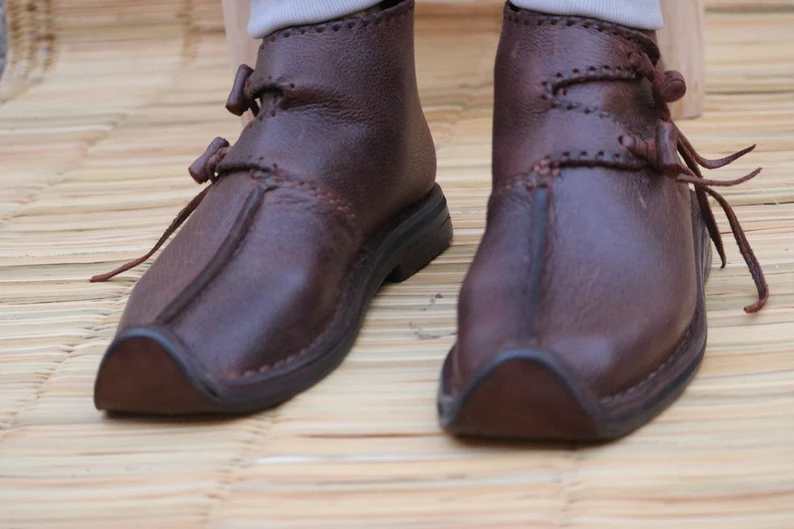
You’ve spent weeks sourcing the right wool tunic, the perfect belt, and a historically accurate cloak. Then you look down — and there they are. Cheap synthetic shoes that ruin the entire impression in an instant.
If you’re serious about Viking Age reenactment, your footwear matters more than most people realize. Period judges, fellow reenactors, and even casual visitors at public events will notice immediately whether your shoes are genuine or a rushed afterthought.
This guide covers everything you need to know to choose authentic Viking footwear for reenactment — from the historical evidence to the practical details that separate real quality from cheap costume alternatives.
Before spending any money, it’s worth understanding what historical authenticity actually requires. The good news: the Viking Age standard for footwear is well-documented.
Hundreds of leather shoe fragments have been recovered from Viking Age sites across Northern Europe. The most significant finds include:
These finds consistently reveal the same core characteristics — characteristics that any authentic Viking shoe must replicate.
If a shoe claims to be “Viking-style” but is made from synthetic materials, machine-stitched, or features elaborate buckles and metal fittings — it is a costume, not a reenactment piece.
One of the most common questions in reenactment communities is whether to go with Viking shoes or Viking boots. The answer depends on your impression and event type.
Our recommendation: If you attend both indoor and outdoor events, start with a quality pair of ankle Viking shoes for everyday impressions, and add knee-high Viking boots later for battle or mounted scenarios.
Not all “Viking shoes” sold online are created equal. Here is a practical checklist to evaluate any pair before you buy:
This is non-negotiable for authentic reenactment. Check the product description carefully:
Real leather has a distinct smell, natural variation in texture, and will develop a patina over time. Synthetic alternatives look identical in photos but fail quickly under real use conditions.
The stitching method determines how long your footwear will last and how historically accurate it is.
Hand-stitching takes significantly longer but creates a connection between upper and sole that can be repaired by any cobbler. Glued soles separate — usually at the worst possible moment.
The sole is what takes the punishment at reenactment events.
A proper multi-layer leather sole provides real protection and will last for years of hard use.
Authentic Viking footwear has a specific, well-documented look. Be skeptical of designs featuring:
The best makers reference specific archaeological finds — ask them which examples their design is based on.
Viking shoes need to fit well for all-day comfort at events. Avoid sellers offering only S/M/L sizing. Look for:
Learning from others’ mistakes saves you money and disappointment. Here are the most frequent errors:
Cheap Viking shoes from costume shops may look acceptable in photos, but they will fail within one or two events. The stitching separates, the synthetic material cracks, and the soles detach. Genuine handmade leather boots cost more upfront but last for years — making them significantly cheaper in the long run.
Many sellers use impressive-looking product photos while hiding the fact that their shoes are glued together and made from PU leather. Always read the full product description and ask directly about materials and construction methods before purchasing.
Reenactment events often involve 8–12 hours on your feet, covering uneven terrain. Shoes that feel fine for an hour in your living room may become unbearable by mid-afternoon at an outdoor event. Genuine leather that molds to your foot over time is far superior to rigid synthetic alternatives.
Real leather stretches slightly and molds to your foot. If in doubt between two sizes, go half a size up. You can always wear thicker socks to fill extra space — you cannot fix a shoe that is too tight.
Even the best leather shoes will deteriorate quickly without proper care. Many reenactors damage expensive footwear simply by not conditioning the leather regularly.
Good maintenance extends the life of your authentic Viking shoes by years:
The best authentic Viking footwear comes from small workshops that specialize in handmade leather goods — not from mass-production factories or costume shops.
At moroccancarpetsdecore.com, our Viking shoes and boots are:
Every pair is made to order — meaning your shoes are crafted specifically for you, not pulled from a warehouse shelf.
Our shoes are made from genuine leather using hand-stitching techniques consistent with period construction methods. We recommend checking with your specific SCA kingdom’s authenticity standards, as requirements vary by region and event type.
Genuine leather typically requires 3–5 wears to fully mold to your foot. Wearing thick wool socks for the first few outings accelerates the process and increases comfort significantly.
Yes — with proper waterproofing treatment applied beforehand. We recommend a natural beeswax waterproofing product applied 24 hours before an outdoor event in wet conditions.
Yes. Our Viking shoes follow traditional turnshoe construction principles — the same method documented in major Viking Age archaeological finds.
We offer custom sizing. Contact us at support@moroccancarpetsdecore.com with your measurements and we will create a pair made specifically for your feet.
Choosing authentic Viking footwear for reenactment does not need to be complicated — but it does require knowing what to look for. Real leather, hand-stitching, historically accurate construction, and proper fit are the four pillars of footwear that will serve you well for years of events.
Don’t let cheap synthetic shoes undermine the hours of effort you’ve put into the rest of your impression. Invest in the real thing — and your feet (and your fellow reenactors) will thank you.
👉 Shop our authentic Viking shoes and boots — handmade from genuine leather, available in all sizes, shipped worldwide.

