Address
304 North Cardinal
St. Dorchester Center, MA 02124
Work Hours
Monday to Friday: 7AM - 7PM
Weekend: 10AM - 5PM
Address
304 North Cardinal
St. Dorchester Center, MA 02124
Work Hours
Monday to Friday: 7AM - 7PM
Weekend: 10AM - 5PM
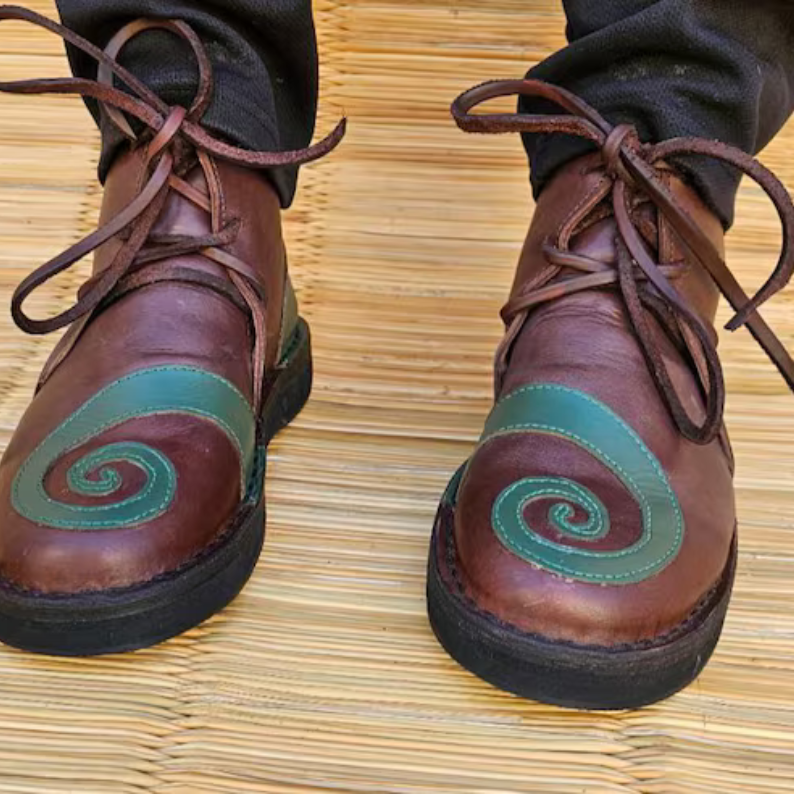
Authentic Viking footwear is one of the most important yet misunderstood elements of Viking clothing. Whether for reenactment, LARP, historical events, or cosplay, choosing the right Viking shoes directly impacts authenticity, comfort, and credibility.
This complete guide covers everything you need to know about authentic Viking footwear, including historical evidence, construction methods, different types of shoes and boots, and how to choose the best option for your needs.
Authentic Viking footwear refers to shoes and boots inspired directly by archaeological discoveries from the Viking Age (c. 800–1100 AD).
According to research published by the
National Museum of Denmark,
Viking shoes were handmade, practical, and designed for daily use rather than decoration.
Archaeological excavations in Scandinavia and Northern Europe provide clear evidence of Viking footwear.
Findings displayed at the
Swedish History Museum
and the
Jorvik Viking Centre
include preserved leather fragments showing the widespread use of turn-shoe construction.
These discoveries confirm that Viking shoes were:
Leather was the primary material used for Viking shoes.
Why leather was essential:
Artifacts preserved by the
British Museum
demonstrate how well-crafted leather footwear could survive extreme conditions.
The most common construction method was the turn shoe.
This method is still used today in authentic reproductions.
The most historically accurate footwear.
Best for:
Simple and practical everyday footwear.
Ideal for:
Boots were less common but adapted today for practicality.
Suitable for:
Conclusion: Authentic Viking footwear clearly outperforms replicas.
When buying Viking shoes or boots, consider:
Choosing correctly improves both comfort and historical accuracy.
Authentic Viking footwear is ideal for:
It is less suited for casual modern wear.
Yes. Natural leather adapts to the foot over time.
Handmade shoes are accepted by most organizations.
Low-cut models can be worn occasionally, but they are best for historical use.
Looking for authentic Viking footwear made using traditional methods?
👉 Discover our collection of handmade Viking shoes and boots and step into true Viking craftsmanship.

