Address
304 North Cardinal
St. Dorchester Center, MA 02124
Work Hours
Monday to Friday: 7AM - 7PM
Weekend: 10AM - 5PM
Address
304 North Cardinal
St. Dorchester Center, MA 02124
Work Hours
Monday to Friday: 7AM - 7PM
Weekend: 10AM - 5PM
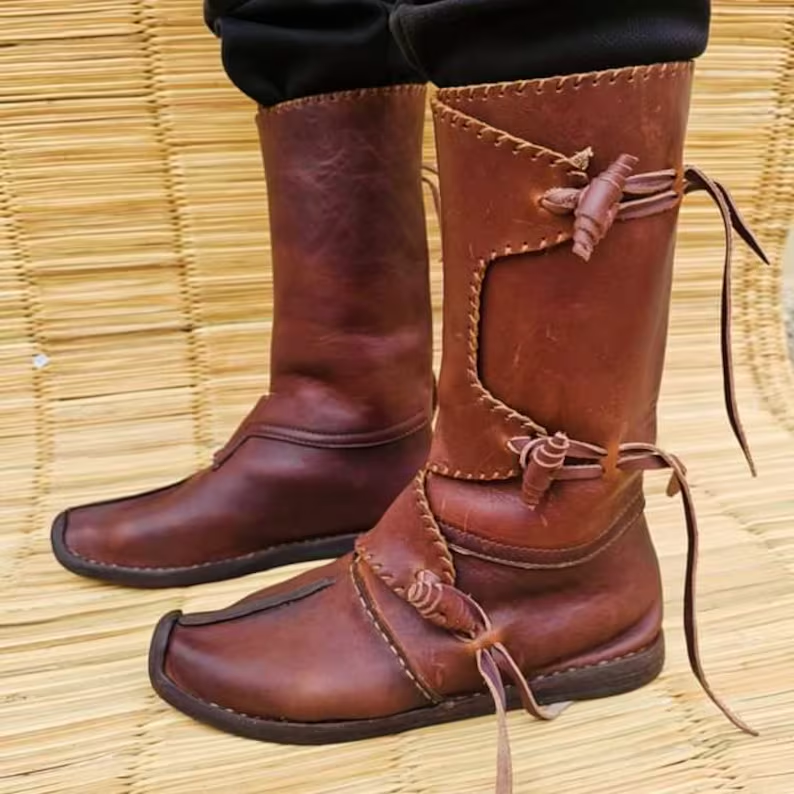
When people imagine Vikings, they often picture helmets, shields, and longships—but rarely think about their footwear. Yet Viking shoes played a crucial role in daily life, travel, and warfare. In this article, we explore what shoes Vikings really wore, how they were made, and why their design still inspires handmade footwear today.
Vikings primarily wore simple leather shoes, designed for durability, flexibility, and ease of repair. Archaeological discoveries across Scandinavia show that Viking footwear was practical rather than decorative.
Most Viking shoes were made from:
Leather was readily available and perfectly suited to the cold, wet Nordic climate.
Viking shoes were entirely handmade, stitched using leather thongs rather than metal nails. This allowed the shoe to remain flexible and lightweight.
The most common technique was:
This method produced a soft sole that adapted naturally to the foot.
Interestingly, many Viking shoes were symmetrical, meaning there was no left or right foot. Over time, the leather molded itself to the wearer’s feet.
Viking shoes were modest in appearance but varied slightly depending on region and period.
They were designed for walking long distances, farming, sailing, and combat.
Contrary to popular belief, high boots were rare during the Viking Age.
Most Vikings wore low-cut shoes, sometimes combined with:
This combination provided warmth without restricting movement.
Our knowledge comes from well-preserved archaeological sites such as:
These discoveries confirm that Viking shoes were:
Their simplicity is exactly why they continue to inspire modern historical footwear.
Today, Viking shoes are widely worn by:
Authenticity is essential, and handmade leather shoes remain the closest match to original Viking footwear.
Modern audiences also appreciate Viking shoes for their:
They align perfectly with today’s barefoot and slow-fashion movements.
While original Viking shoes were made with basic tools, modern artisans recreate them using:
Handmade Viking shoes produced today—especially by skilled leather artisans—remain faithful to historical designs while offering improved durability.
Not all Viking shoes sold online are authentic. Historically accurate pairs should:
Handcrafted leather shoes made using traditional methods are the closest representation of true Viking footwear.
Vikings wore simple, handmade leather shoes designed for real life—walking, working, sailing, and surviving harsh environments. Their footwear reflects the Viking mindset: functional, durable, and honest.
Today, Viking shoes remain relevant because they tell a story—of craftsmanship, history, and human resilience.
If you are interested in Viking culture, reenactment, or historically inspired footwear, understanding what Vikings wore on their feet is the first step toward authenticity.

