Address
304 North Cardinal
St. Dorchester Center, MA 02124
Work Hours
Monday to Friday: 7AM - 7PM
Weekend: 10AM - 5PM
Address
304 North Cardinal
St. Dorchester Center, MA 02124
Work Hours
Monday to Friday: 7AM - 7PM
Weekend: 10AM - 5PM
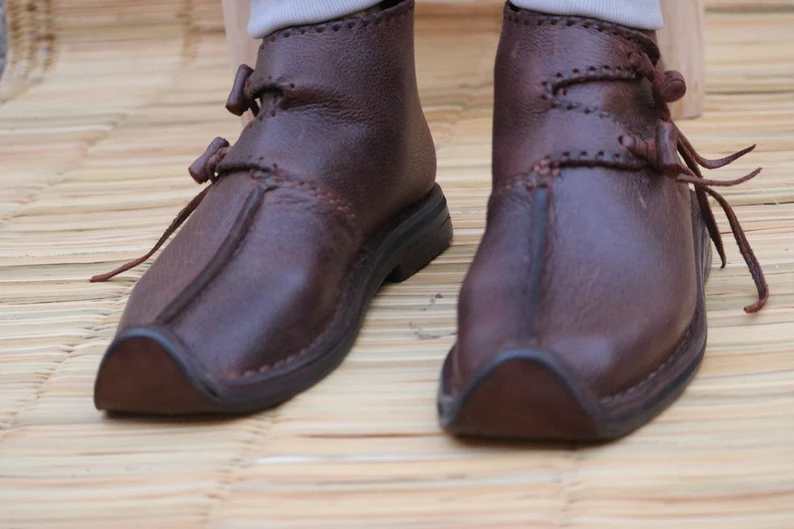
This ultimate guide explores authentic Viking footwear, historical construction methods, the best types of Viking shoes and boots, and how to choose the perfect pair for your needs.
Historical evidence from Scandinavia shows that Vikings mostly wore simple leather shoes known as turn shoes.
According to research from the National Museum of Denmark, Viking shoes were handmade from leather and designed for durability and flexibility.
These shoes were practical footwear used for travel, farming, and daily life.
The most common Viking footwear was the turn shoe.
Turn shoes remain the preferred footwear for serious reenactors today.
Historical reenactment requires footwear that closely matches archaeological evidence.
Best for summer events and historical markets.
Great for long reenactment events and walking.
Most historically accurate option.
Many reenactment groups require handmade leather shoes to maintain authenticity.
While historical Vikings mostly wore shoes, modern events often use Viking boots for practicality and style.
Handmade Viking boots combine historical inspiration with modern durability, making them ideal for active roleplay.
✔ Natural leather
✔ Long lifespan
✔ Historical accuracy
✔ Comfortable fit
✘ Synthetic materials
✘ Poor durability
✘ Incorrect design
✘ Limited comfort
For reenactors and collectors, handmade footwear is always the better choice.
Leather was the primary material used during the Viking Age.
Artifacts preserved in the British Museum show how well leather shoes survived centuries underground.
These materials provide flexibility, breathability, and durability.
Viking festivals and medieval markets across Europe attract thousands of participants every year.
Countries with strong Viking culture events include:
Authentic Viking shoes help participants create a convincing historical appearance.
Before buying Viking footwear, consider several important factors.
Some reenactment groups require historically accurate shoes.
Grass, forest, and stone surfaces require flexible soles.
Soft natural leather improves comfort and durability.
Viking shoes should allow natural foot movement.
Authentic Viking footwear is perfect for:
These shoes combine historical authenticity with practical comfort.
Yes. High-quality leather adapts to the shape of your foot.
Yes. They were designed for everyday outdoor use.
Handmade leather shoes are accepted by most historical reenactment groups.
Authentic Viking shoes are more than just costume accessories. They represent centuries of craftsmanship and historical tradition. Whether you are attending a reenactment event, LARP game, cosplay convention, or Viking festival, choosing handmade Viking footwear ensures both authenticity and comfort.
Investing in quality Viking shoes is one of the best ways to elevate your historical outfit and experience Viking culture more authentically.
Looking for authentic handmade Viking shoes and boots?
Discover our collection of Viking footwear designed for reenactment, LARP, and cosplay enthusiasts.
Step into real Viking craftsmanship today.

