Address
304 North Cardinal
St. Dorchester Center, MA 02124
Work Hours
Monday to Friday: 7AM - 7PM
Weekend: 10AM - 5PM
Address
304 North Cardinal
St. Dorchester Center, MA 02124
Work Hours
Monday to Friday: 7AM - 7PM
Weekend: 10AM - 5PM
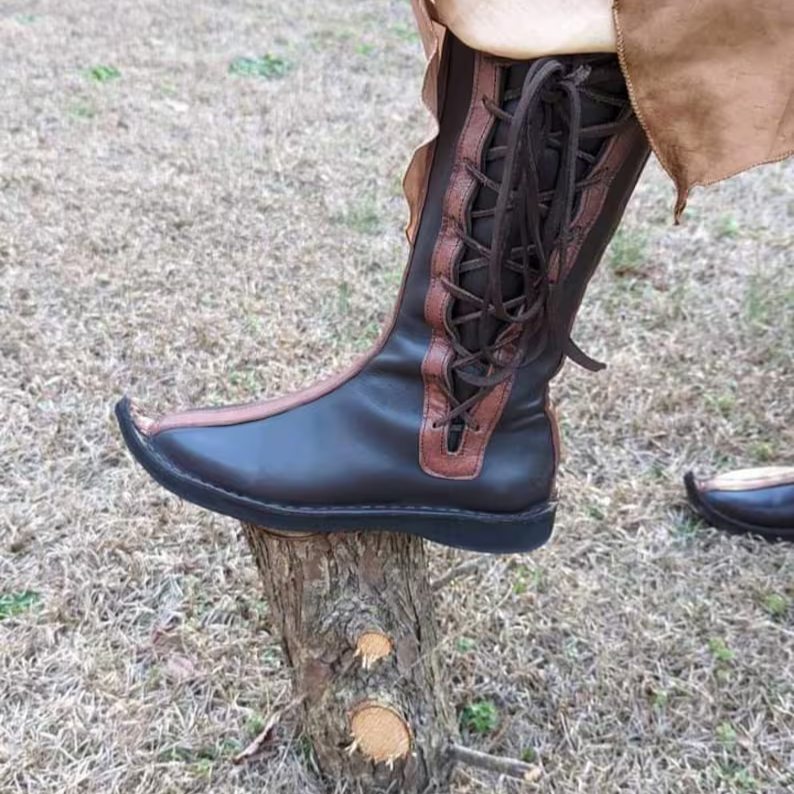
Choosing the right Viking shoes is essential for anyone interested in historical reenactment, LARP, cosplay, or Viking festivals. Authentic footwear not only improves the historical accuracy of your outfit but also provides comfort during long events.
Because many costume shops sell inaccurate or low-quality shoes, it is important to understand how real Viking footwear was made and what features to look for before buying.
This guide explains how to choose authentic Viking shoes, the materials used in historical footwear, and the key factors that determine quality.
Historical evidence shows that Vikings mostly wore simple leather shoes made using traditional techniques.
According to the
<a href=”https://www.nationalmuseet.dk/en” target=”_blank” rel=”noopener”>National Museum of Denmark</a>,
Viking footwear was designed for durability, flexibility, and everyday use.
Typical characteristics include:
These practical shoes allowed Vikings to walk long distances across different terrains.
Selecting the right Viking shoes requires paying attention to several important details.
The most important element of authentic Viking footwear is high-quality leather.
Natural leather offers several advantages:
Artifacts preserved in the
<a href=”https://www.britishmuseum.org/collection” target=”_blank” rel=”noopener”>British Museum</a>
show that well-crafted leather shoes could survive for centuries.
The traditional Viking shoe was built using the turn-shoe technique.
Authentic reproductions today still use this method to replicate historical designs.
Comfort is extremely important, especially during long events such as reenactment battles or historical festivals.
When choosing Viking shoes, consider:
Good Viking shoes should allow natural foot movement.
Different events require different types of Viking footwear.
The most historically accurate choice is Viking turn shoes made from natural leather.
Many players prefer Viking boots because they provide ankle support and durability.
For conventions and festivals, both Viking shoes and boots can work depending on the costume style.
Museums such as the
<a href=”https://www.jorvikvikingcentre.co.uk/” target=”_blank” rel=”noopener”>Jorvik Viking Centre</a>
continue to inspire modern Viking enthusiasts and reenactment communities.
✔ authentic design
✔ natural materials
✔ long lifespan
✔ comfortable fit
✘ synthetic leather
✘ inaccurate designs
✘ limited durability
Serious reenactors usually prefer handmade footwear for authenticity and reliability.
Authentic Viking shoes are ideal for:
These shoes help recreate a realistic Viking experience.
Yes. Natural leather adapts to the foot after a short break-in period.
Yes. They were originally designed for everyday outdoor use.
Handmade turn shoes are considered the most historically accurate Viking footwear.
Choosing authentic Viking shoes requires understanding historical design, materials, and construction techniques. Handmade leather footwear remains the best option for anyone who wants comfort, durability, and historical authenticity.
Whether for reenactment, LARP, cosplay, or Viking festivals, investing in quality Viking shoes can significantly improve your historical outfit and overall experience.
Looking for authentic handmade Viking shoes?
Explore our collection of Viking footwear designed for reenactment, LARP, cosplay, and historical events.

