Address
304 North Cardinal
St. Dorchester Center, MA 02124
Work Hours
Monday to Friday: 7AM - 7PM
Weekend: 10AM - 5PM
Address
304 North Cardinal
St. Dorchester Center, MA 02124
Work Hours
Monday to Friday: 7AM - 7PM
Weekend: 10AM - 5PM
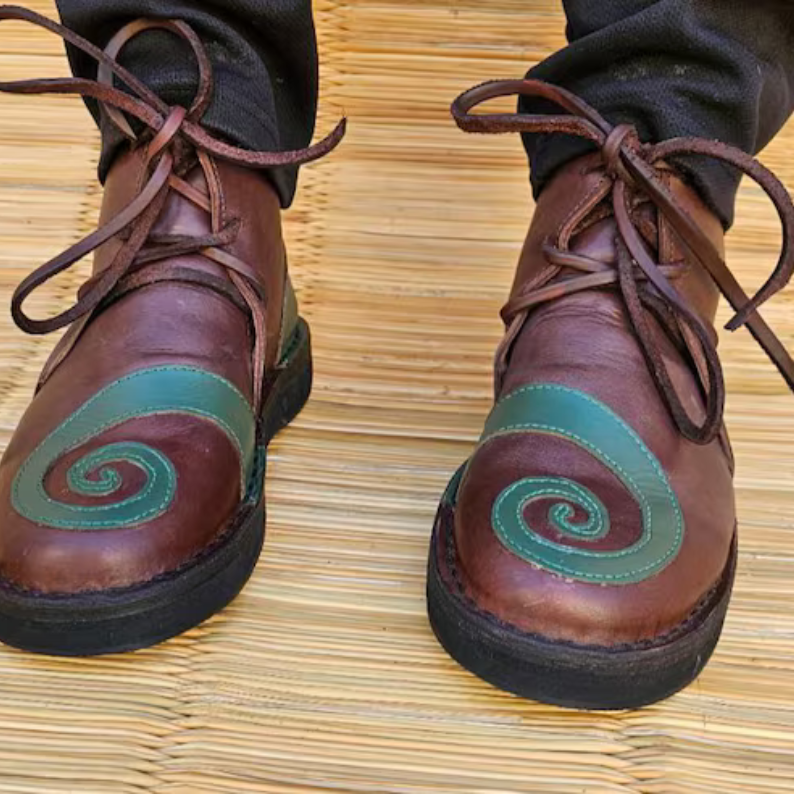
Viking footwear played an essential role in the daily lives of Norse people during the Viking Age. While armor and weapons often attract the most attention, Viking shoes and boots were equally important for survival, travel, and combat.
Today, Viking footwear has gained popularity among historical reenactors, LARP players, cosplayers, and Viking festival enthusiasts. Authentic Viking shoes are also studied by historians and preserved in museums around the world.
This guide explores the history, materials, construction techniques, and modern uses of Viking footwear.
Viking footwear Archaeological discoveries reveal that Vikings mostly wore simple leather shoes called turn shoes.
These shoes were practical, lightweight, and flexible—perfect for long journeys and daily work.
According to the
<a href=”https://www.nationalmuseet.dk/en” target=”_blank” rel=”noopener”>National Museum of Denmark</a>,
many Viking shoes were made from natural leather and sewn using durable stitching methods.
These features allowed Vikings to move quickly across forests, fields, and rocky landscapes.
The turn shoe method was the most common technique used by Viking shoemakers.
This traditional technique is still used today in authentic Viking shoe reproductions.
The most historically accurate type of Viking footwear.
Commonly used for:
Although less common than shoes, boots were used in colder climates and harsh environments.
Best for:
Boots provide additional ankle protection and durability.
In colder Scandinavian regions, Vikings sometimes lined their shoes with fur or wool for insulation.
These adaptations helped Vikings survive harsh northern winters.
Leather was the primary material used in Viking footwear.
Artifacts preserved in the
<a href=”https://www.britishmuseum.org/collection” target=”_blank” rel=”noopener”>British Museum</a>
show how Viking leather shoes could survive centuries underground.
These materials provided durability, breathability, and flexibility.
Interest in Viking culture has grown significantly over the past decade. Historical events, museums, and media have inspired many people to recreate Viking life.
Places like the
<a href=”https://www.jorvikvikingcentre.co.uk/” target=”_blank” rel=”noopener”>Jorvik Viking Centre</a>
show realistic Viking environments and artifacts, inspiring reenactment communities worldwide.
Countries with strong Viking reenactment communities include:
Because of this growing interest, authentic Viking shoes have become highly demanded items.
✔ authentic historical design
✔ natural leather materials
✔ long lifespan
✔ comfortable for events
✘ synthetic materials
✘ inaccurate designs
✘ poor durability
Serious reenactors prefer handmade Viking footwear because it matches historical evidence.
Authentic Viking shoes and boots are popular among:
These communities require footwear that looks historically accurate and performs well during long events.
Yes. Leather naturally adapts to the shape of the foot.
Most Vikings wore low leather shoes, but boots existed for colder climates.
Authentic handmade shoes are widely accepted in reenactment groups.
Viking footwear represents an important part of Viking culture and craftsmanship. Simple yet effective leather shoes allowed Vikings to travel long distances, explore new lands, and survive in harsh environments.
Today, authentic Viking shoes and boots continue to be used by reenactors, LARP players, and historical enthusiasts who want to experience Viking culture as accurately as possible.
Looking for authentic Viking footwear?
Explore our collection of handmade Viking shoes and boots designed for reenactment, LARP, cosplay, and historical festivals.
Step into the Viking Age with authentic craftsmanship.
Shop Now https://moroccancarpetsdecore.com/product/custom-handmade-leather-boots/

